
Dear reader,
B2C e-commerce (ie: Amazon) is among the most glamourized business models in the "West". It’s also fraught with unit economics issues across both D2C and marketplace models. Yet, it continues to draw much attention as it’s so visible in daily life.
In emerging markets, a similar phenomena exists with the “digitizing corner stores” playbook.
The opportunity is undeniably huge, but building a business in the space at venture scale requires harmonious execution across digital and physical operations. Margins are known to be razor thin.
Today’s subject, Bangladesh’s PriyoShop, is a case study in combining asset-light and asset-heavy operations to serve these corner stores.
Biography
Asikul Alam Khan is the founder of PriyoShop, a startup empowering Bangladesh’s micro-retailers with technology, embedded finance, and logistics.
PriyoShop was founded in 2013. As of October 2026, PriyoShop is serving 221,000+ retailers and 296 FMCG brand partners.
Prior to founding PriyoShop, Asikul was the founder of IT outsourcing agency SplendorIT which worked with FMCG brands in countries including England, Japan, and the Netherlands.
What problem is PriyoShop solving?
Bangladesh has a $200b* (USD) retail industry. It’s built on a network of millions of neighbourhood micro-retailers (MSMEs) that form the foundations of a domestic, consumption-driven economy. They are the daily source of groceries, personal care products, beverages for Bangladeshis.
These MSMEs face interconnected problems across supply chain, logistics and financing. Every part of their operations is fragmented, from inventory procurement to working capital access. It’s a pain shared across the wider ecosystem of wholesalers, logistics services, financial services institutions (FSIs) and fast moving consumer goods (FMCG) brands.
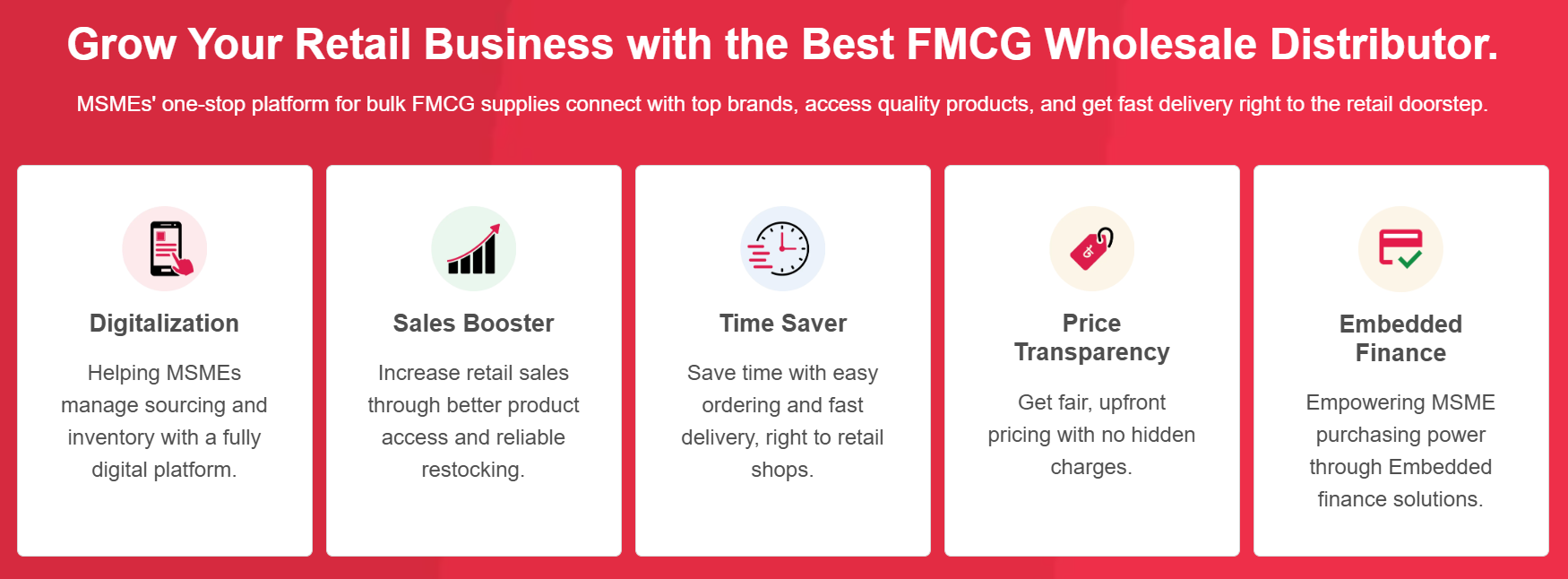
PriyoShop is building an integrated suite of products (from procurement to financing) to serve the MSME retailer ecosystem across emerging markets, beginning with Bangladesh.
Source: PriyoShop
When you founded PriyoShop, wasn’t your initial focus on B2C rather than B2B?
Correct.
I have been building in the technology space for 20 years. Before PriyoShop, I founded an IT outsourcing agency that built a niche doing e-commerce work for FMCG brands globally. It was a profitable venture but I realized it couldn’t scale in the way an e-commerce marketplace could.
This was the impetus for launching the original iteration of PriyoShop in 2013, a B2C e-commerce marketplace for Bangladesh.
It gained traction rapidly. Having always been bootstrapped, concepts such as ‘startups’ and ‘raising venture capital’ were unknown to us. Growth was funded by having good margins, 30% on the case of our highest selling product, t-shirts.
But to make a B2C marketplace work at scale, large volumes of capital were needed as customer acquisition and retention costs grow over time. Alibaba’s 2018 acquisition of our competitor Daraz accentuated this dynamic as they began to offer aggressive discounts. We needed to raise to compete.
What influenced the pivot to B2B?